
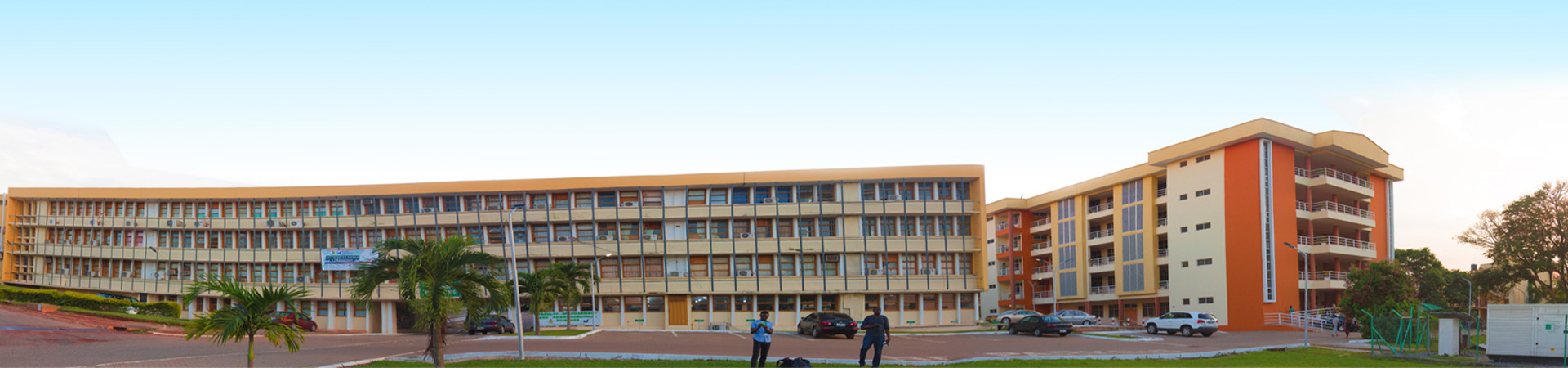

The KNUST College of Health Sciences was established to consolidate existing health-related faculties. It is one of the university's premier colleges, training highly skilled health professionals who lead medical care, research, and innovation in Ghana and globally.
It attained the status of a college by a change in the University Statutes that came into being in January 2005. Before this time, the components of the college existed separately as the Faculty of Pharmacy and the School of Medical Sciences.
Chronological Milestones
1953: The Pharmacy Department was established as one of the earliest specialized faculties at the then Kumasi College of Technology.
1975: The School of Medical Sciences (SMS) was founded. It began with an initial class of just 21 students and evolved significantly.
January 2005: The College of Health Sciences (CHS) was officially formed by an act of the University Statutes. This united the previously independent faculties under one administrative college.
- Faculty of Pharmacy and Pharmaceutical Sciences: One of the oldest and most respected pharmacy schools in West Africa.
- School of Medical Sciences (SMS): Focuses on undergraduate (MBChB) and postgraduate medical training.
- Faculty of Allied Health Sciences: Houses programs such as Medical Laboratory Technology
- School of Dentistry: Dedicated to dental and oral health education.
- School of Veterinary Medicine: Trains professionals in animal health and veterinary science.
- School of Nursing and Midwifery: Provides intensive theoretical and clinical teaching in nursing and midwifery, and builds on knowledge in the basic sciences.
- School of Public Health: Exists to advance knowledge in science and technology through creating an environment for undertaking relevant/cutting-edge research, quality teaching/training of thought leaders, entrepreneurship training and community engagement to improve the quality of life/public health.
- Kumasi Centre for Collaborative Research in Tropical Medicine (KCCR): A major international biomedical research facility hosted within the college.