KNUST School of Nursing and Midwifery Hosts Nursing and Midwifery Council of Ghana for Accreditation of Public Health Nursing and Critical Care Nursing Programs
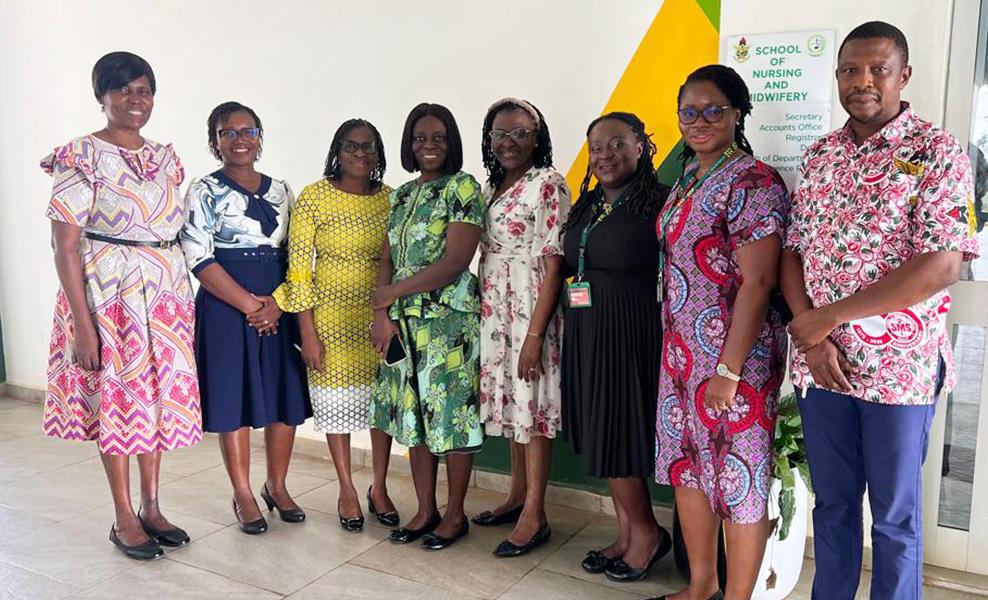
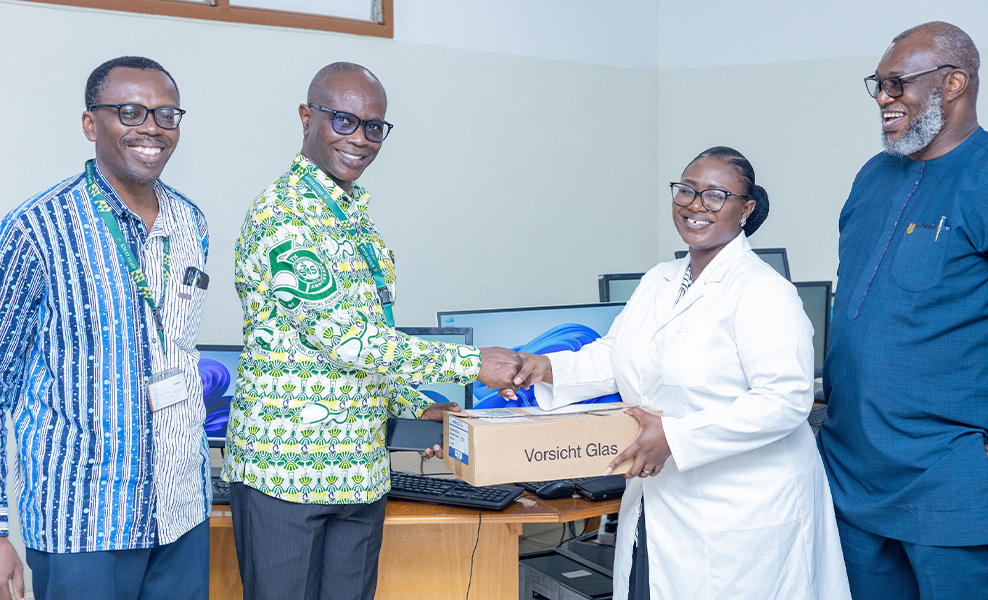
The Kwame Nkrumah University of Science and Technology (KNUST) School of Nursing and Midwifery recently hosted an official delegation from the Nursing and Midwifery Council (NMC) of Ghana. This visit, which took place on Thursday, January 16, 2026, was part of an accreditation process for the university’s BSc. Public Health Nursing and Critical Care Nursing programs, alongside the Post-Basic BSc. in Public Health Nursing programme. Accreditation by the NMC is a regulatory requirement and a key benchmark of quality assurance in nursing and midwifery education in Ghana.
Welcoming the delegation, the Dean of the School of Nursing and Midwifery, Prof. Veronica Dzomeku, described the visit as both an assessment and a partnership.
“We are delighted to host the Nursing and Midwifery Council as we work together to strengthen the quality of nursing and midwifery education,” she said. “Our focus is on transformative education and excellence. We are committed to ensuring that our students are fully prepared to address both local and global healthcare challenges.”
The Nursing and Midwifery Council (NMC) delegation, led by Ms. Gloria Aduse-Opoku, Regional Officer at the NMC’s Kumasi Central Office, and Ms Adelaide Koryoe Offoe, Regional Officer at the Kumasi East Office, examined multiple aspects of the programmes: BSc. Public Health Nursing (basic and post-basic) and Critical Care Nursing programs (post-basic).
Their assessment covered curriculum content, staff qualifications, institutional policies, and partnership agreements, among others. Facilities were also inspected, including skills laboratories, lecture halls, libraries and classrooms, as well as arrangements for clinical supervision through preceptors and memoranda of understanding with training sites.
Following the evaluation, the Head of the Department of Public Health Nursing, Dr. Mrs. Abigail Kusi-Amponsah Diji, and the Head of the Department of Emergency and Critical Care Nursing, Dr. Philemon Amooba, thanked the university’s management for supporting the programmes.
They highlighted what they described as sustained investment in educational resources and infrasructure aimed at preparing nurses and midwives to respond to Ghana’s evolving healthcare needs.
The visit was viewed as more than a regulatory requirement. For the School, it represented a reaffirmation of KNUST’s ambition to remain at the forefront of nursing and midwifery education in Ghana and beyond.
Accreditation processes can shape everything from student intake numbers to curriculum design and clinical placements. A positive outcome not only secures programme continuity but also strengthens public confidence in the training of future healthcare professionals.
As Ghana continues to face growing demands in public health and critical care, institutions such as KNUST are under increasing pressure to produce highly skilled practitioners.
Although the Council’s final determination is yet to be formally announced, the school management expressed confidence in the strength of the programmes and their alignment with national standards and health priorities.
For now, the visit marks a significant step in ensuring that the next generation of nurses and midwives emerging from KNUST are prepared to serve on the frontlines of healthcare, both at home and beyond.