KNUST Pathology Department Receives 11 Computers from Sainsbury Wellcome Centre, University College London
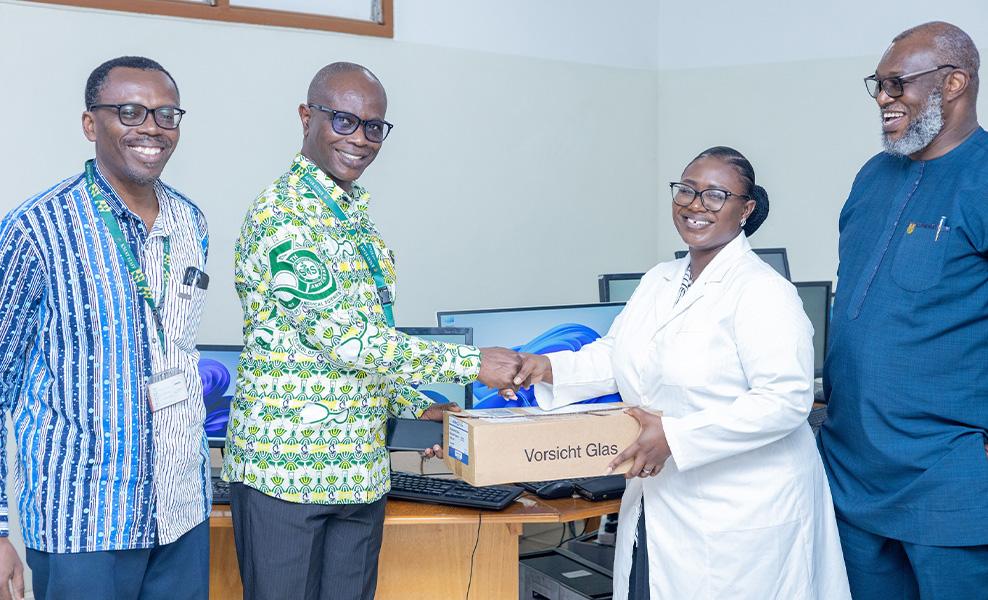
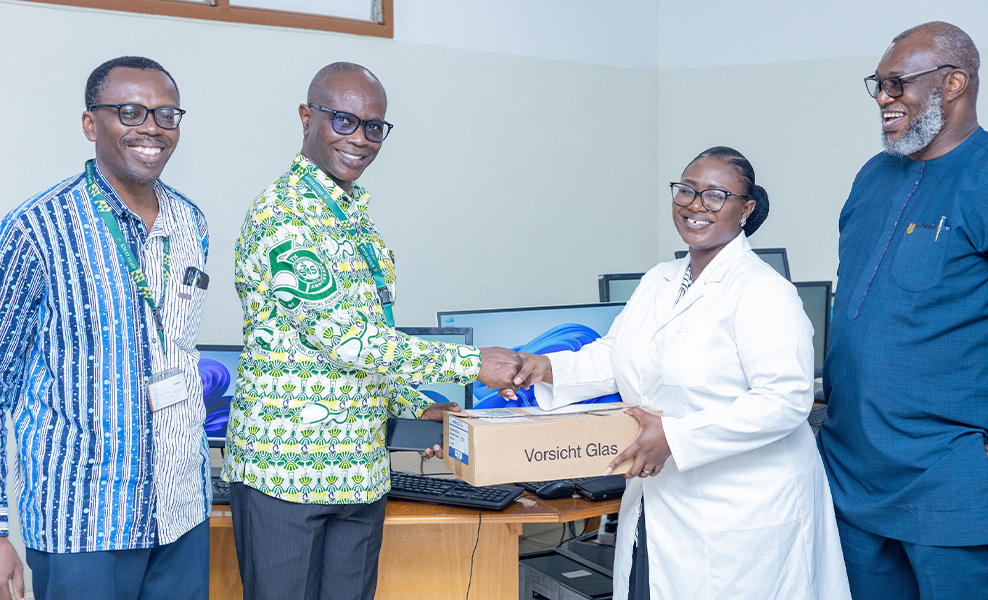
The Department of Pathology at the School of Medical Sciences, Kwame Nkrumah University of Science and Technology (KNUST), has received a significant boost to its operational capacity following the donation of 11 computers by the Sainsbury Wellcome Centre, University College London.
The donation marks an important step toward improving efficiency in teaching, research, and administrative work within the department. It follows a visit by representatives from the Centre about a year ago, during which they assessed the department’s infrastructure and identified critical areas requiring support.
In addition to the computers, the team provided essential laboratory consumables, including gloves, post-exposure prophylaxis (PEP) kits, pipette tips, and well plates. These items are expected to significantly enhance the department’s day-to-day laboratory operations and support ongoing academic and research activities.
A liaison from the Sainsbury Wellcome Centre reaffirmed the Centre’s commitment to building a sustained partnership with the department, emphasizing the value of continued collaboration in strengthening capacity and advancing biomedical research.
Speaking at the presentation ceremony, the Dean of the School of Medical Sciences, Prof. Akwasi Antwi-Kusi, highlighted the ongoing challenges associated with funding critical equipment in academic institutions. He expressed profound gratitude for the timely intervention, noting that the donation will not only benefit the Department of Pathology but also contribute positively to the broader goals of the School.
He further underscored the importance of partnerships in addressing resource gaps, expressing optimism that the collaboration with the Sainsbury Wellcome Centre will yield long-term benefits for teaching, research, and healthcare delivery.
The donation serves as a strong reminder of the impact of strategic collaborations in advancing education and strengthening health systems, particularly in resource-constrained settings.