Study Finds Strong Link Between Rainfall and Road Crashes in Kumasi
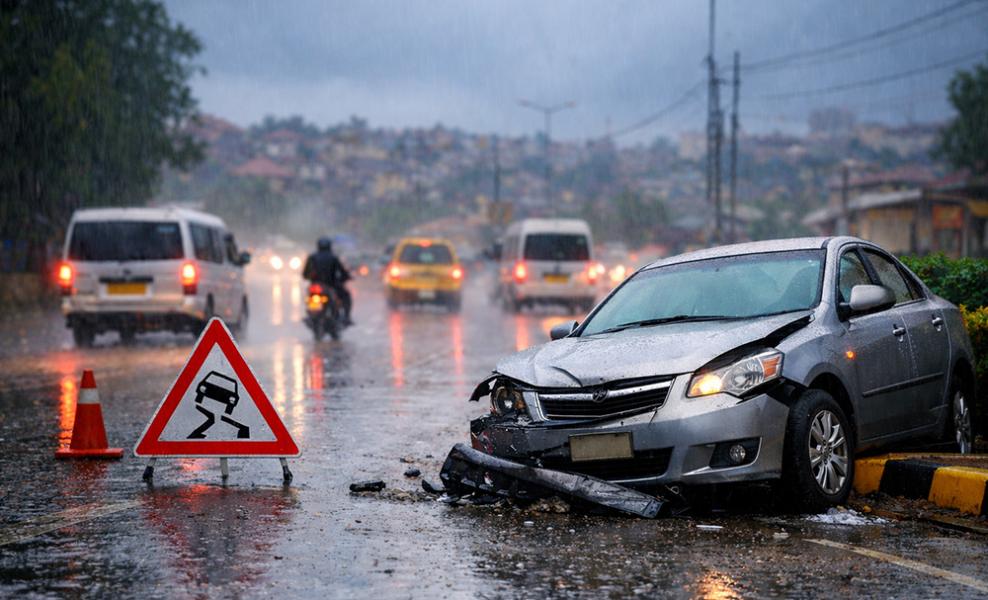
A new study by researchers from the School of Public Health has found that rising rainfall significantly increases the risk of road traffic crashes in Ghana’s Greater Kumasi Metropolitan Area, highlighting the role of climate conditions in road safety in one of the country’s busiest regions.
The study, led by Mr. Jacob Solomon Idan, analyzed more than a decade of crash, weather and population data and found that higher monthly rainfall was associated with an increased risk of road traffic crashes.
Researchers examined 9,022 road traffic crashes recorded between 2010 and 2021 across seven districts in the Greater Kumasi Metropolitan Area.
The findings published in the Journal of Science and Technology showed that a one-millimetre increase in average monthly rainfall was linked to a higher likelihood of road crashes, while lower average monthly temperatures were also significantly associated with increased crash risk.
“Rainfall was a key driver of crash risk, particularly when increases persisted over successive months,” the researchers said, noting that crashes often rose after sustained wet conditions rather than isolated rainfall events.
Districts traversed by major highways, Kwadaso, Suame and Asokwa, consistently recorded the highest crash risks during both dry and rainy seasons, the study found. During the rainy season, these districts experienced up to twice the relative risk of road crashes compared with lower-risk areas such as Kumasi Central and Old Tafo.
Temporal analysis showed that crashes typically peaked between May and November, coinciding with the rainy season and periods of increased travel demand. Crash incidence also rose steadily after 2013 and remained elevated through 2021.
Road traffic injuries remain a major public health burden in Ghana, where roads serve as the primary transport network. National data show that traffic-related deaths and serious injuries remain high, particularly among young adults.
The researchers said lower temperatures may affect road surface conditions, vehicle handling and driver alertness, while rainfall reduces visibility and tyre traction, increasing stopping distances.
They recommended seasonal road safety campaigns, infrastructure improvements such as better drainage in high-risk districts, and climate-responsive traffic management, including variable speed limits and weather-based early warning systems.
Other authors include Professor Emmanuel Kweku Nakua, Dr Daniel Boateng, Dr Thomas Peprah Agyekum, Dr Aliyu Mohammed, Mr Shadrach Mintah, and Dr Eric Adjei-Boadu.