Prof. Christian Agyare Delivers Scholarly Presentation on Ethnopharmacology at the University of Pretoria
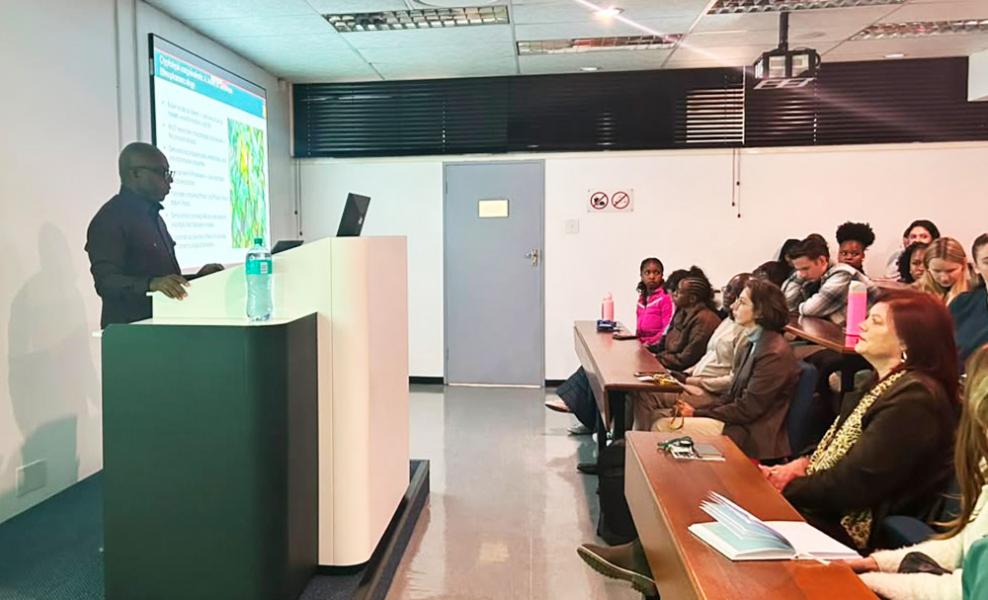
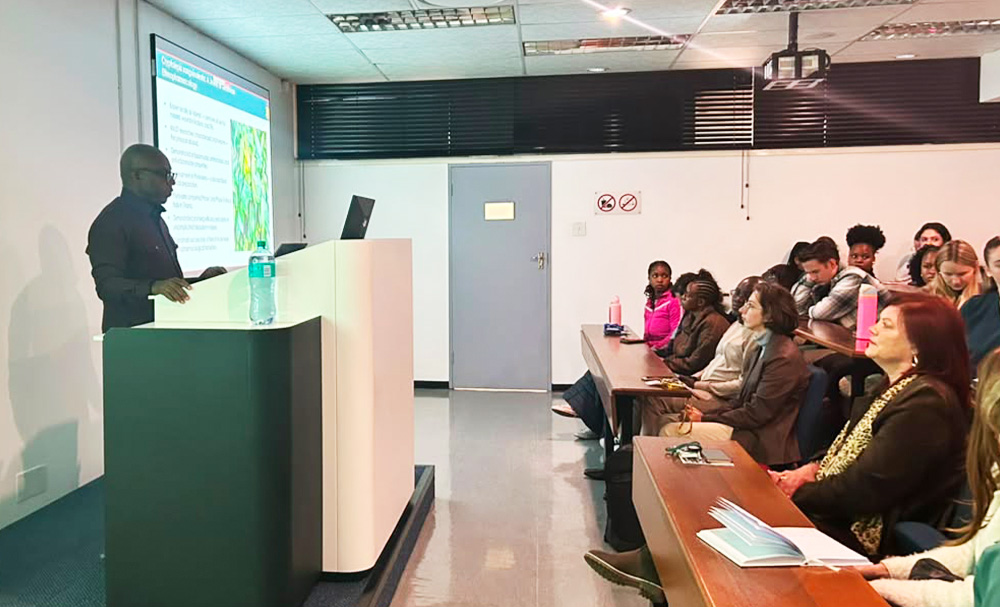
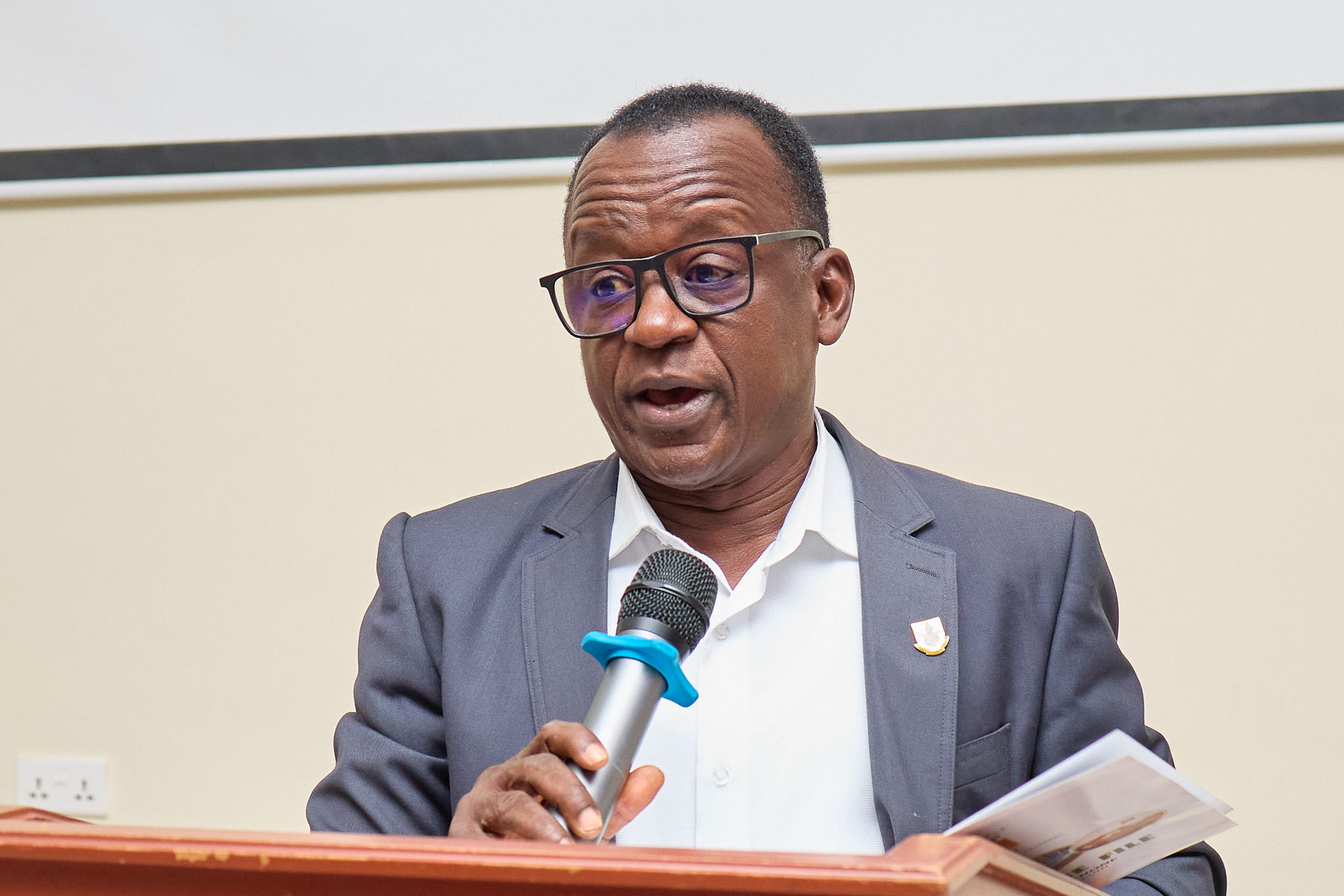
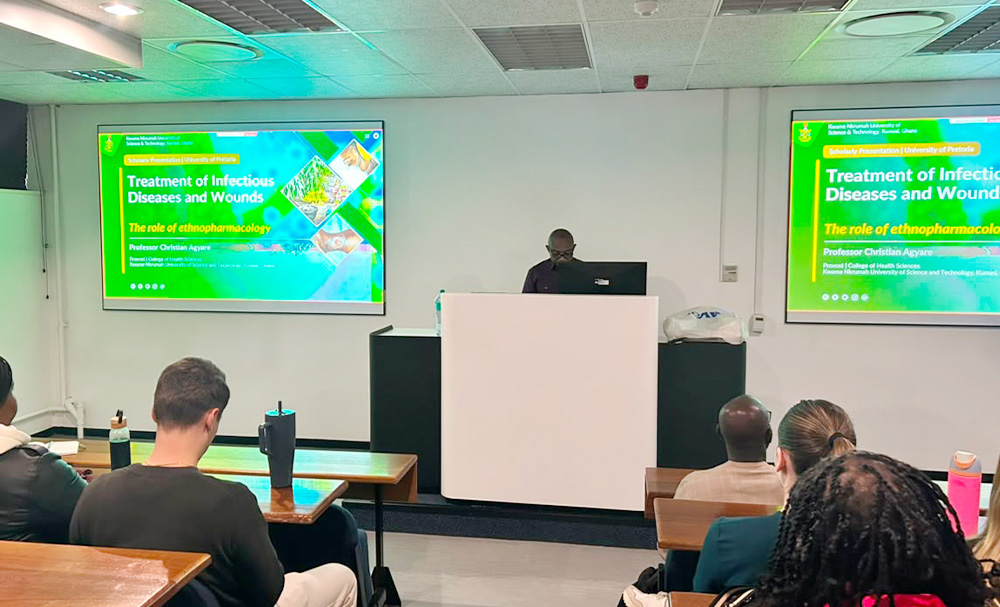
The Provost of the KNUST College of Health Sciences, Christian Agyare, has delivered a distinguished scholarly presentation at the Department of Pharmacology, Faculty of Health Sciences, University of Pretoria, highlighting the transformative role of ethnopharmacology in the treatment of infectious diseases and wound management.
The presentation, titled “Treatment of Infectious Diseases and Wounds: The Role of Ethnopharmacology,” was delivered on June 4, 2026, as part of an academic exchange visit hosted by the Department of Pharmacology of the University of Pretoria. The event brought together faculty members, researchers, postdoctoral fellows, graduate students, and distinguished guests to engage in discussions on advancing health research through indigenous knowledge systems and scientific innovation.
A globally respected Professor of Pharmaceutical Microbiology, Prof. Agyare is renowned for his extensive research on antimicrobial and anti-inflammatory agents from medicinal plants and other natural products, wound-healing agents, ethnopharmacology, and antibiotic resistance in humans and animals. His presentation reflected decades of pioneering research and scholarly contributions that have positioned KNUST as a leading centre for ethnopharmacological research in Africa.
Addressing the audience, Prof. Agyare emphasized that ethnopharmacology occupies a critical intersection between traditional knowledge and modern biomedical science. He noted that over 80 percent of Africa’s rural population relies on traditional medicine for primary healthcare. In comparison, fewer than 10 percent of the continent’s approximately 45,000 plant species have undergone systematic pharmacological investigation. This, he explained, presents an enormous opportunity for scientific discovery and the development of novel therapeutic agents.
Tracing the evolution of ethnopharmacological research across Africa, Prof. Agyare highlighted the significant growth in scientific output over the past three decades, driven by increasing efforts to validate traditional medicinal practices through rigorous pharmacological, toxicological, and clinical investigations. He underscored the role of traditional medicine in addressing major public health challenges, particularly infectious diseases, wound care, and the growing threat of antimicrobial resistance.
A substantial portion of the presentation focused on Ghana’s contributions to the field and the pivotal role played by KNUST in advancing ethnopharmacological research. Prof. Agyare outlined several landmark studies undertaken by researchers at KNUST, particularly within the Faculty of Pharmacy and Pharmaceutical Sciences, which have investigated the antimicrobial, anti-inflammatory, antiplasmodial, and wound-healing properties of indigenous medicinal plants.
Among the notable examples highlighted were studies on Cryptolepis sanguinolenta (Nibima), a medicinal plant traditionally used in Ghana for the treatment of malaria, wound infections, and sexually transmitted infections. He explained how KNUST researchers have contributed significantly to understanding the pharmacological activities of cryptolepine, the plant’s principal bioactive compound, and to the development of standardized herbal preparations that have undergone clinical evaluation.
Prof. Agyare also showcased pioneering work on Phyllanthus muellerianus (Awob3), a medicinal plant widely used in traditional wound care. Research led by his team demonstrated the plant’s antimicrobial activity against wound pathogens and its ability to accelerate wound healing through enhanced tissue regeneration. He further highlighted studies on Terminalia superba, Boerhavia diffusa, Alchornea cordifolia, and Plumbago zeylanica, all of which have shown promising therapeutic potential in wound management.
Particularly noteworthy was his discussion on antimicrobial resistance (AMR), one of the most pressing global health challenges. He presented findings from KNUST research that demonstrated the ability of certain Ghanaian medicinal plant extracts to inhibit and disrupt biofilms formed by multidrug-resistant pathogens such as Methicillin-resistant Staphylococcus aureus (MRSA) and Pseudomonas aeruginosa. These findings, he noted, offer promising avenues for the development of alternative treatment strategies for chronic wound infections.
In recognition of South Africa’s leadership in ethnopharmacological research, Prof. Agyare commended the University of Pretoria and its Department of Pharmacology for their pioneering contributions to medicinal plant research, phytochemistry, pharmacology, and traditional medicine regulation. He paid tribute to renowned South African scientists whose work has advanced the scientific understanding of medicinal plants such as Pelargonium sidoides, Sutherlandia frutescens, and Hypoxis hemerocallidea, while also strengthening methodologies for evaluating the efficacy and safety of herbal medicines.

While celebrating the progress made across the continent, Prof. Agyare candidly addressed the challenges that continue to hinder the growth of ethnopharmacology in Africa. These include inadequate research funding, fragmented research efforts, weak policy implementation, insufficient intellectual property protection, and the persistent challenge of brain drain. He stressed the need for coordinated efforts among governments, universities, industry, and development partners to overcome these barriers.
To bridge these gaps, he proposed increased investment in research and development, stronger multi-institutional collaborations, harmonized regulatory frameworks for traditional medicines, enhanced postgraduate training opportunities, and robust mechanisms for protecting indigenous knowledge and ensuring equitable benefit-sharing in line with the Nagoya Protocol.
In concluding his presentation, Prof. Agyare made a compelling case for ethnopharmacology as an indispensable scientific discipline for Africa’s future. He argued that the continent’s rich biodiversity, extensive traditional medical knowledge, and growing scientific capacity position Africa to become a global leader in natural product research and drug discovery.
He further emphasized that ethnopharmacology is not only a pathway to affordable and accessible healthcare but also a means of preserving cultural heritage, advancing scientific innovation, and creating economic opportunities through the development of evidence-based traditional medicines.
The presentation also underscored the growing academic and research relationship between KNUST and the University of Pretoria. Prof. Agyare described the collaboration between the two institutions as a model for strengthening African scientific partnerships and advancing solutions to the continent’s health challenges through shared expertise and innovation.
His scholarly presentation was widely praised by participants for its depth, scientific rigour, and vision for the future of health research in Africa. It further reinforced the KNUST College of Health Sciences’ commitment to research excellence, innovation, and the promotion of evidence-based approaches to healthcare that harness Africa’s rich natural and intellectual resources.
As a leading advocate for ethnopharmacological research, Prof. Agyare continues to champion the integration of traditional knowledge with modern science, ensuring that Africa’s medicinal heritage contributes meaningfully to addressing contemporary global health challenges.