KNUST CHS Postgraduate Conference Explores the Future of Research Beyond ChatGPT
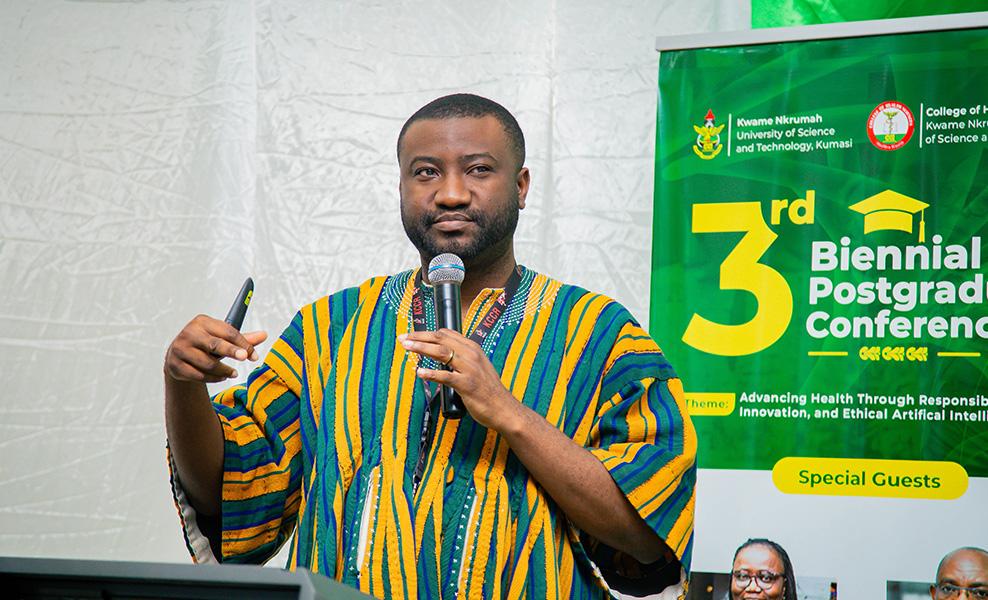
The second day of the KNUST College of Health Sciences (CHS) Biennial Postgraduate Conference commenced with a highly engaging pre-conference workshop that challenged participants to rethink the future of research in the age of Artificial Intelligence (AI).
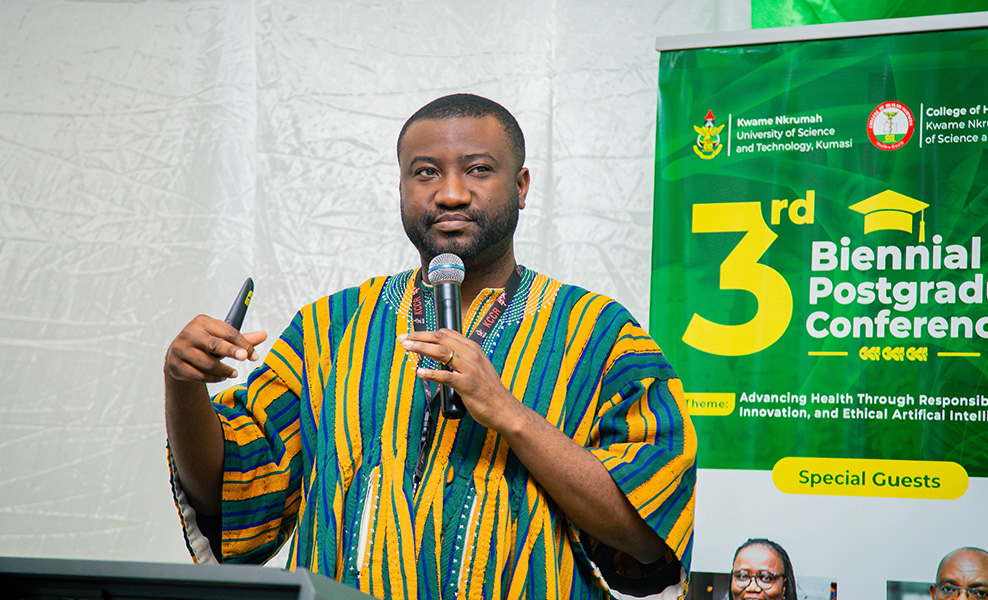
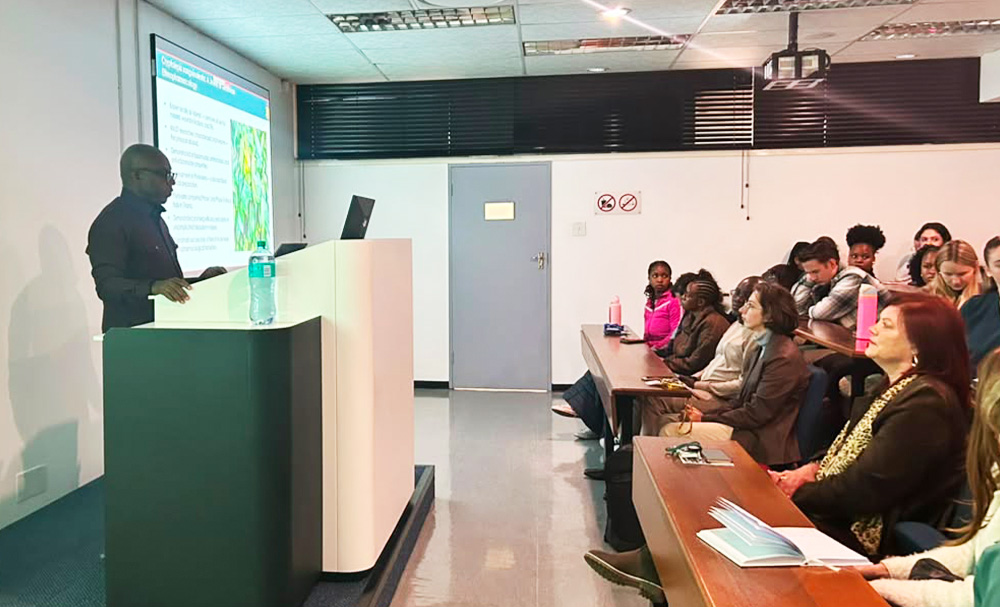
Delivered by Prince Ebenezer Adjei, Lecturer at the Department of Computer Engineering, KNUST, and Research Fellow at KCCR-GHID, the workshop titled “Beyond ChatGPT: Harnessing Artificial Intelligence for Modern Research” provided practical insights into how AI is transforming every stage of the research process—from conceptualization to publication.
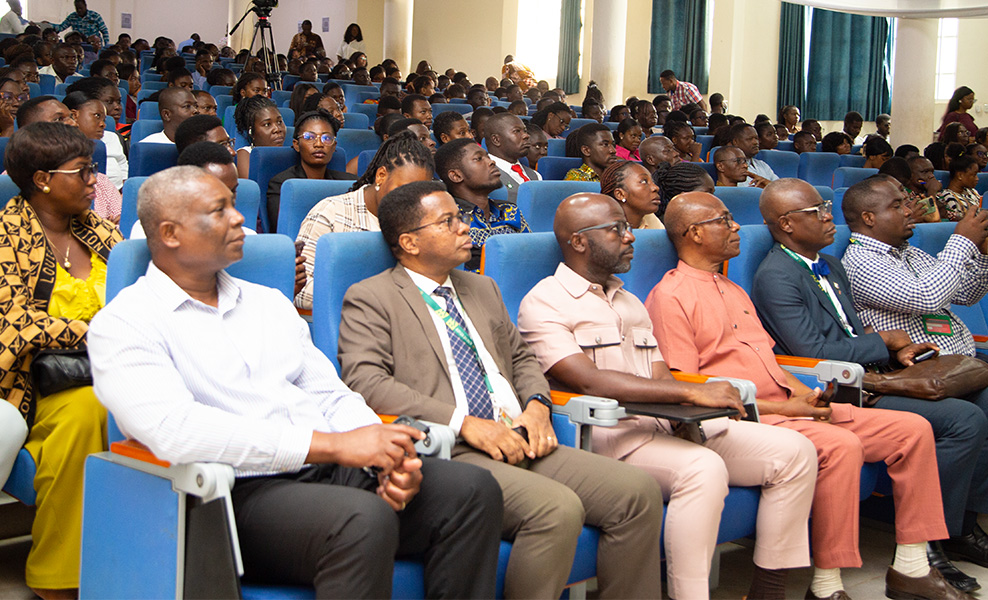
Addressing postgraduate students, researchers, clinicians, and academics gathered at the conference, Dr. Adjei emphasized that the rapid evolution of AI means researchers do not need to master every emerging tool. Rather, they must understand the principles, workflows, and responsible application of AI technologies to enhance research quality and productivity.
A key highlight of the session was the demonstration of how AI can significantly streamline traditional research workflows. Participants were introduced to AI-powered approaches for generating research ideas, refining research questions, conducting literature reviews, designing studies, preparing ethics applications, managing and analysing data, drafting manuscripts, and selecting publication outlets.
Using practical examples in public health research, Dr. Adjei illustrated how AI tools can help transform broad interests into feasible and impactful research projects. He demonstrated how researchers can use advanced prompting techniques to identify research gaps, generate study designs, rank research ideas by feasibility and impact, and develop comprehensive evidence tables within minutes.
One of the most impactful sessions focused on literature reviews, where AI was presented as a powerful assistant capable of generating search strategies, identifying landmark studies, synthesizing findings, extracting methodological differences, and highlighting knowledge gaps. This approach, he noted, enables researchers to spend less time on repetitive tasks and more time on critical thinking and scientific interpretation.
The workshop also highlighted AI’s growing role in protocol development and ethics preparation. Participants learned how AI can assist in drafting study protocols, consent forms, participant information sheets, risk mitigation plans, and data protection frameworks while supporting researchers to identify ethical concerns before submission to review boards.
In the area of data management and analysis, attendees were introduced to practical applications of AI in questionnaire development, qualitative interview design, data cleaning, statistical analysis, code generation, and data visualization. These capabilities, according to Dr. Adjei, have the potential to improve efficiency and reduce technical barriers for postgraduate researchers.
Beyond research implementation, the workshop explored how AI can support manuscript development, journal selection, conference abstract preparation, and scientific dissemination. However, participants were cautioned against overreliance on AI-generated content.
A major takeaway from the workshop was the introduction of the VERIFY Framework, a responsible AI research workflow that encourages researchers to Validate research problems, Examine evidence critically, Refine research questions, Identify appropriate methods, Fact-check all outputs, and ultimately Yield accountable research products.
Dr. Adjei stressed that while AI offers unprecedented opportunities for accelerating scientific discovery, researchers remain responsible for the integrity, accuracy, and ethical standards of their work. He warned participants about the risks of AI hallucinations, fabricated references, and inaccurate interpretations, emphasizing that verification must remain an essential component of every research workflow.
The workshop resonated strongly with the conference theme, “Advancing Health Through Responsible Research, Innovation, and Ethical Artificial Intelligence,” and provided participants with practical strategies for leveraging AI responsibly in health research.
As the College of Health Sciences continues to promote cutting-edge research and innovation, the session reinforced KNUST’s commitment to equipping the next generation of researchers with the knowledge and skills required to navigate an increasingly AI-driven scientific landscape.
The workshop set the tone for the second day of the conference, inspiring participants to embrace emerging technologies while upholding the principles of rigorous, ethical, and impactful research.